Introduction
Navia Dratp (nah-vee-ah drap) is a totally innovative game that fuses chess with fantasy. The game is played by two players, each of whom has complete control over a Force made up of Battle Pieces called Gulled and powerful beings known as Maseitai (mah-say-tie). The ultimate goal of the game is for a player to gain possession of a piece called the Navia by storing Gyullas (gee-ahs) crystals, developing special abilities in his own Maseitai, and implementing strategic tactics. Maseitai are summoned by the Navia and join a player's Force as reliable allies. These Maseitai can be utilized to their fullest potential through Dratping, which increases their range of motion or grants special powers.
Playmat
Take a moment to familiarize yourself with the layout of the Navia Dratp playmat. The general layout resembles a chess board, but with several significant differences:
Battlefield
– the term used for the 7 square x 7 square area where gameplay unfolds.
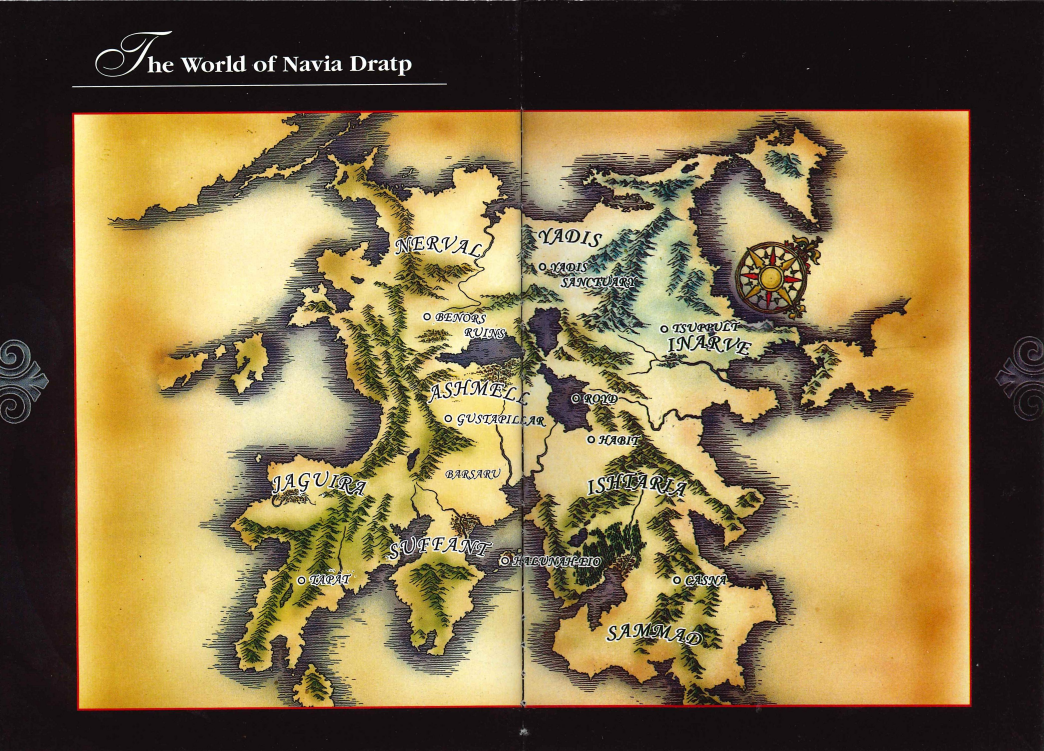
Navia Square
– the center square in each player's back row marked with the symbol above. The Navia always begins the game in this square.
Summon Square

– the three squares on either side of each player's Navia Square, as well as the extreme right and left squares of each player's second row marked with the symbol above. Unless otherwise indicated by specific Maseitai effects, all Maseitai that enter the game (except Navia Guard Maseitai) must be summoned to an unoccupied Summon Square.
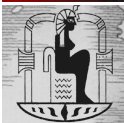
Gyullas Reduction Zone
- the five squares in the middle of the center row marked with the symbol above. When a player's Maseitai Dratps on one of these squares, the Dratp cost is reduced by half; round up if
necessary (see Dratp Cost). Navia Battle Pieces are an exception to this rule: they receive no reduction to their 60 Gyullas Dratp cost.
GYULLAS VAULT
the area to the right of the Battlefield at each player's end of the playmat where Gyullas crystals are stored before being earned and after being spent.
GYULLAS POOL
the area to the right of the Battlefield at each player's end of the playmat directly below the Gyullas Vault. Gyullas that are earned are placed here until they are spent.
GRAVEYARD
the area to the left of the Battlefield at each player's end of the playmat. Gulled and Maseitai defeated in battle are placed here.
END LINE
the line between the last row on each player's end of the Battlefield and their Maseitai Keep. A Gulled crossing an opponent's End Line performs a line over, while a Navia crossing an opponent's End Line performs a Navia Goal.
MASEITAI KEEP
the seven spaces behind each player's End Line where Maseitai are kept until they are summoned to the Battlefield.
Battle Pieces
A player's Gulled and Maseitai pieces are collectively known as the player's Force. One Force consists of 1 Navia, 7 Black Gulled, 2 Red Gulled, and 7 Maseitai.
Gulled
The Gulled Battle Pieces may be likened to the pawns in chess. Unlike the Maseitai, the Gulled pieces have a fixed movement grid:
Black Gulled may move 1 space forward per turn, as indicated on the piece itself. Each time they move, the player controlling them earns 1 Gyullas crystal.
Red Gulled may move 1 space forward per turn in one of three directions, as indicated on the piece itself. Each time a red Gulled moves, the player controlling it earns 3 Gyullas crystals.
Maseitai
Unlike the Gulled, each and every Maseitai has a unique movement grid, as well as additional effects or motion capabilities that can be unlocked by Dratping. It is recommended that players use the Maseitai found in the Starter Set until gameplay becomes familiar, however, players are free to purchase additional Maseitai, incorporating them into their Force as they choose. Keep in mind that each player's Force must contain 7 Maseitai. Up to two of the same Maseitai may be included in a player's Force. (In the original tabletop version, this required one to be an uncolored piece and the other a full-color painted version.) Each Maseitai has the following elements:
Figure
– the artwork for this Maseitai, displayed on the board piece in normal view. The card face shows both the Maseitai's figure and its movement grid. In compact view, the piece image is replaced by a larger compass grid.

Compass
– the movement grid for this Maseitai, shown in the piece detail panel when a piece is selected or hovered over. It indicates the Maseitai's range of motion. When Dratping, the compass flips to reveal enhanced movement.
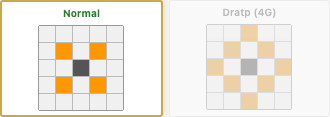
Dratp Cost
– shown at the top of the compass in the piece detail panel. The Dratp cost indicates the amount of Gyullas that must be spent in order to Dratp, as well as the amount of Gyullas earned by an opponent if the Maseitai is defeated in battle. Maseitai that Dratp in the Gyullas Reduction Zone pay only half the normal Dratp cost (round up if necessary).
Movement Grid
– the grid of squares in the piece detail panel showing a Maseitai's available movement. In compact view, the piece image is replaced by a larger compass grid, making movement easier to read at a glance.
Name
– the name of the specific Maseitai, shown in the piece detail panel.
Dratp Effect
– a special power unique to each Maseitai, shown in the piece detail panel. Note that although many Dratp effects result in an opponent's Maseitai being removed from the Battlefield, no Gyullas are earned from these Maseitai (see Taking Pieces).
Dratp effects are revealed once a Maseitai has Dratped. Although each Dratp effect is unique, several basic groups can be identified:
Enhance Movement
– the most common effect. A new movement grid indicates the characters expanded range of movement options.
Enhanced movement grids with SOLID arrows indicate that a Maseitai can move in the indicated direction an unlimited amount of spaces, providing the path is not blocked by another Battle Piece.
BOUNCE
a variation of the Enhance Movement effect, BOUNCE effect Maseitai have movement grids with BENT arrows. Bent arrows indicate that a Maseitai which can move in an unobstructed path to the edge of the Battlefield can "bounce" and continue movement as indicated on the compass. The bounce applies in all directions shown on the compass; only some directions are illustrated here due to the limited size of the displayed movement grid.
JUMP
– a variation of the Enhance Movement effect, JUMP effect Maseitai have movement grids with DASHED arrows. Dashed arrows indicate that a Maseitai can move in the indicated direction an unlimited amount of spaces, with the added ability of being able to jump one Battle Piece blocking its path.
SACRIFICE
– an effect that is triggered by removing their OWN Maseitai from the Battlefield. Note that the opponent earns no Gyullas from the sacrificed Maseitai. Maseitai with this effect are marked with a skull symbol (shown below).
Example
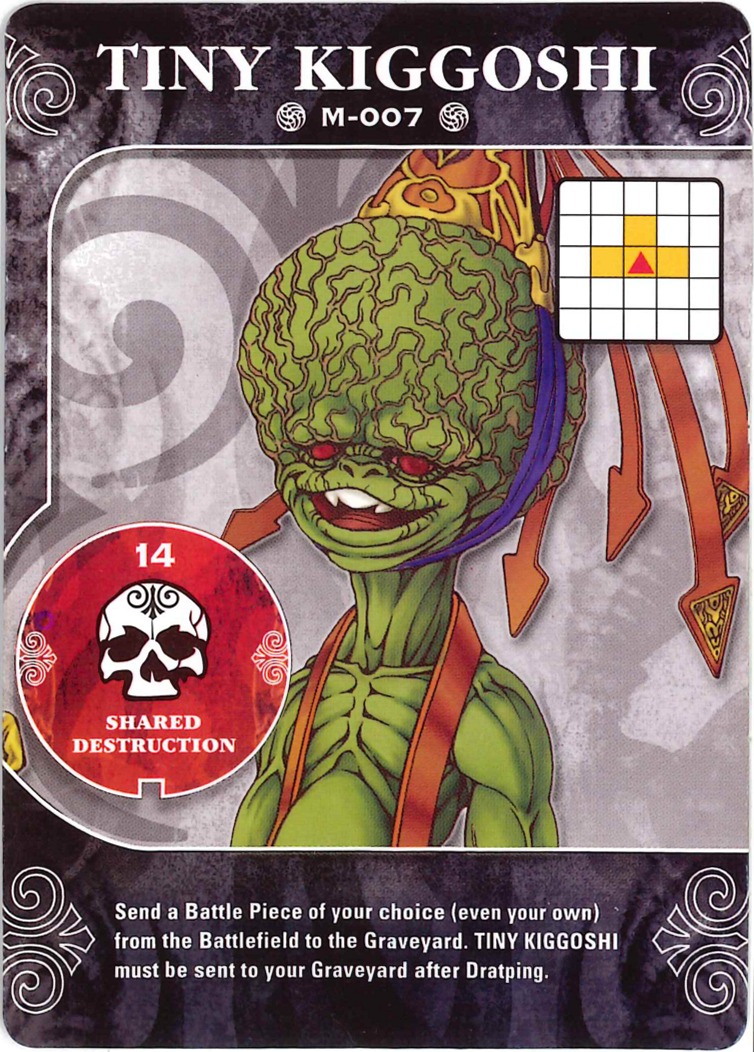
TINY KIGGOSHI
M-007
Send a Battle Piece of your choice (even your own) from the Battlefield to the Graveyard. TINY KIGGOSHI must be sent to your Graveyard after Dratping.
CONTINUOUS
– an effect that continues until the Maseitai with that effect is removed from the Battlefield.
Example
KANABA
M-018
On the turn you Dratp, choose a Battle Piece of your choice (even your own) from the Battlefield and ban all moves and Dratp effects for that Battle Piece while KANABA is on the Battlefield. KANABA cannot move after Dratping.
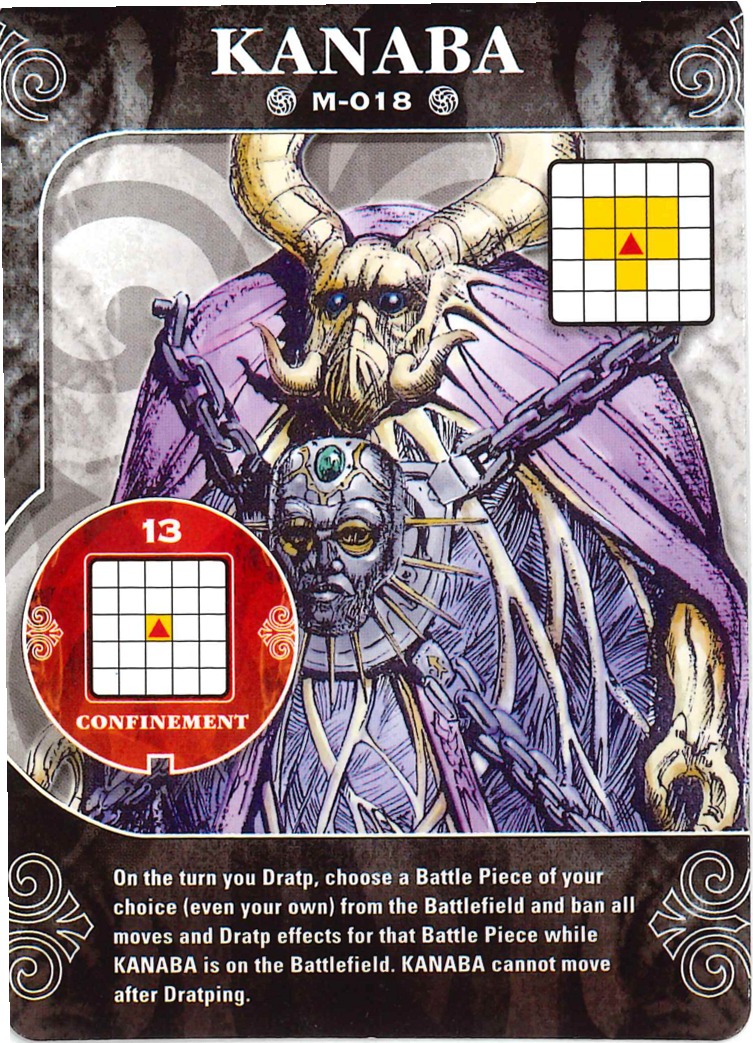
Dratped compass
INVOKE
– an effect that allows a player to activate a certain effect by paying Gyullas. Maseitai with this effect are marked with ④. The number inside the symbol is the Gyullas that must be paid to activate the Dratp effect. If the Maseitai with an Invoke Dratp effect is on a square in the Gyullas Reduction Zone, this Gyullas cost is reduced by half (round up if necessary). A Maseitai with an Invoke Dratp effect can use the Dratp effect each turn, as long as the player can pay the cost. Finally, the Maseitai with an Invoke Dratp effect can move and then Invoke, but cannot Invoke and then move.
Example
GUNDRILL
M-006
Decrease the range of movement as indicated on the compass. Once per turn, you may move 1 of your Battle Pieces of your choice from the Battlefield to an open space indicated with ♦ by paying 4 Gyullas.
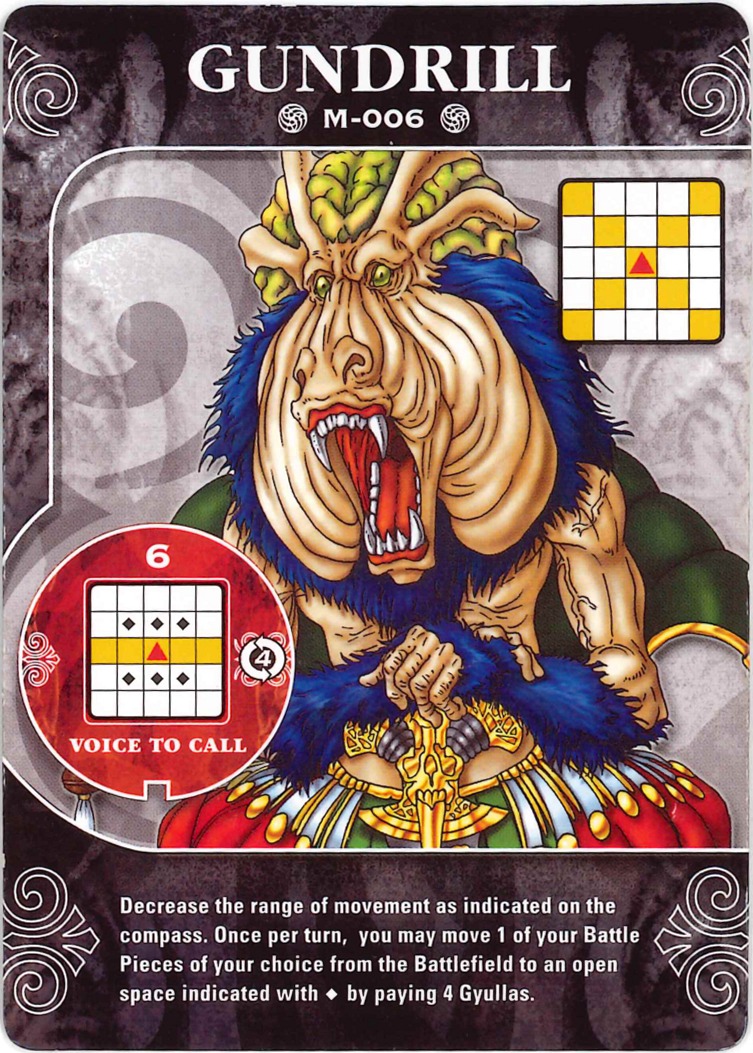
Dratped compass
IMMORTALITY
– an effect that prevents a Maseitai being sent to the Graveyard by being "taken." However, a Maseitai with Immortality CAN be "sent" to the Graveyard (for example, by a Maseitai with a Sacrifice Dratp effect).
Example
COYDROCOMP
M-026
Decrease the range of movement as indicated on the compass. COYDROCOMP cannot be taken by your opponent.
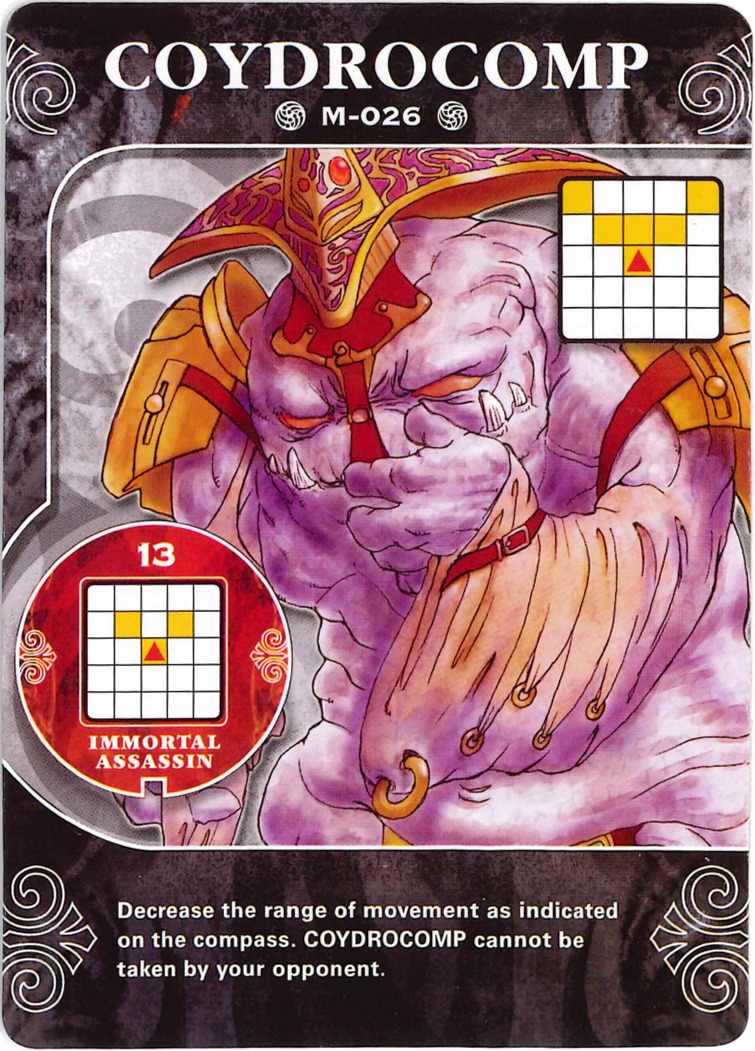
Dratped compass
Navia Guard Maseitai
Navia Guard Maseitai are identified by the phrase "Navia Guard" included in their text box, directly above their Dratp effect. These Maseitai are identical to regular Maseitai, with one important exception: the Navia Guard Maseitai CANNOT be summoned to a Summon Square. Instead, the Navia Guard Maseitai can be summoned to any of the 8 spaces surrounding the space occupied by the Navia, as long as the space is unoccupied. If one of the 8 spaces surrounding the Navia is an unoccupied Summon Square, a player is allowed to summon the Navia Guard Maseitai to it. After the initial turn in which the Navia Guard is summoned, it must move according to its compass movement grid as normal.
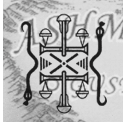
TROLL
M-001
NAVIA GUARD
Increase the range of movement as indicated on the compass. Earn 10 Gyullas when TROLL is sent to the Graveyard by your opponent.
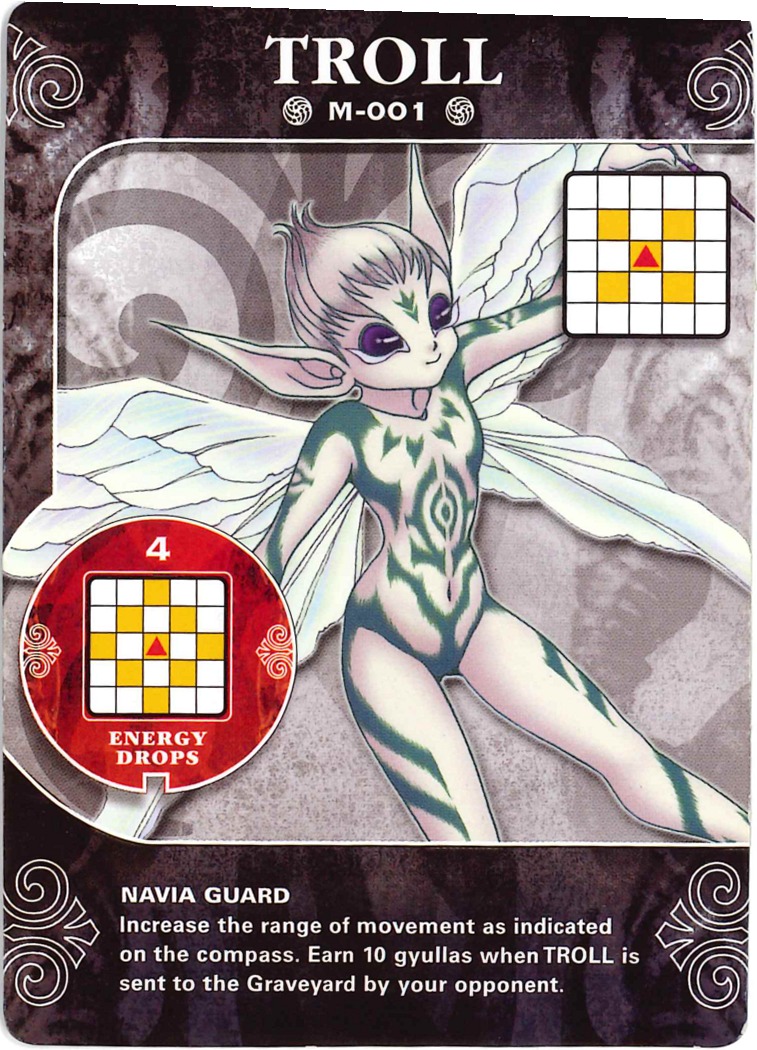
Dratped compass
Gyullas
Gyullas crystals are an important part of Navia Dratp. 17 Gyullas are included in the Starter Set:
1 Gold Gyullas worth 20
6 Blue Gyullas worth 5 each
10 White Gyullas worth 1 each
Gyullas are earned by:
⇒ Moving Gulled Battle Pieces. Black Gulled earn 1 Gyullas when they are moved, Red Gulled earn 3. Note that in most conditions Maseitai do not earn Gyullas when they are moved (although some, such as GYULLAS TURTLE, are notable exceptions).
⇒ Taking Maseitai and Gulled. A player who defeats an opponent's Maseitai in battle earns Gyullas equal to the defeated Maseitai's Dratp cost. A player who defeats an opponent's Gulled in battle earns 1 Gyullas for a Black Gulled and 3 Gyullas for a Red Gulled.
⇒ Achieving a Line Over. A player achieving a Line Over can choose between two bonuses, one of which is receiving 10 Gyullas.
Winning the Game
There are four different ways to win a game of Navia Dratp:
- Taking an opponent's Navia
- Performing a Dratp with the Navia, known as a Navia Dratp
- Performing a Line Over with the Navia, known as a Navia Goal
- The surrender (forfeit) of the game by your opponent
Gameplay
Set Up
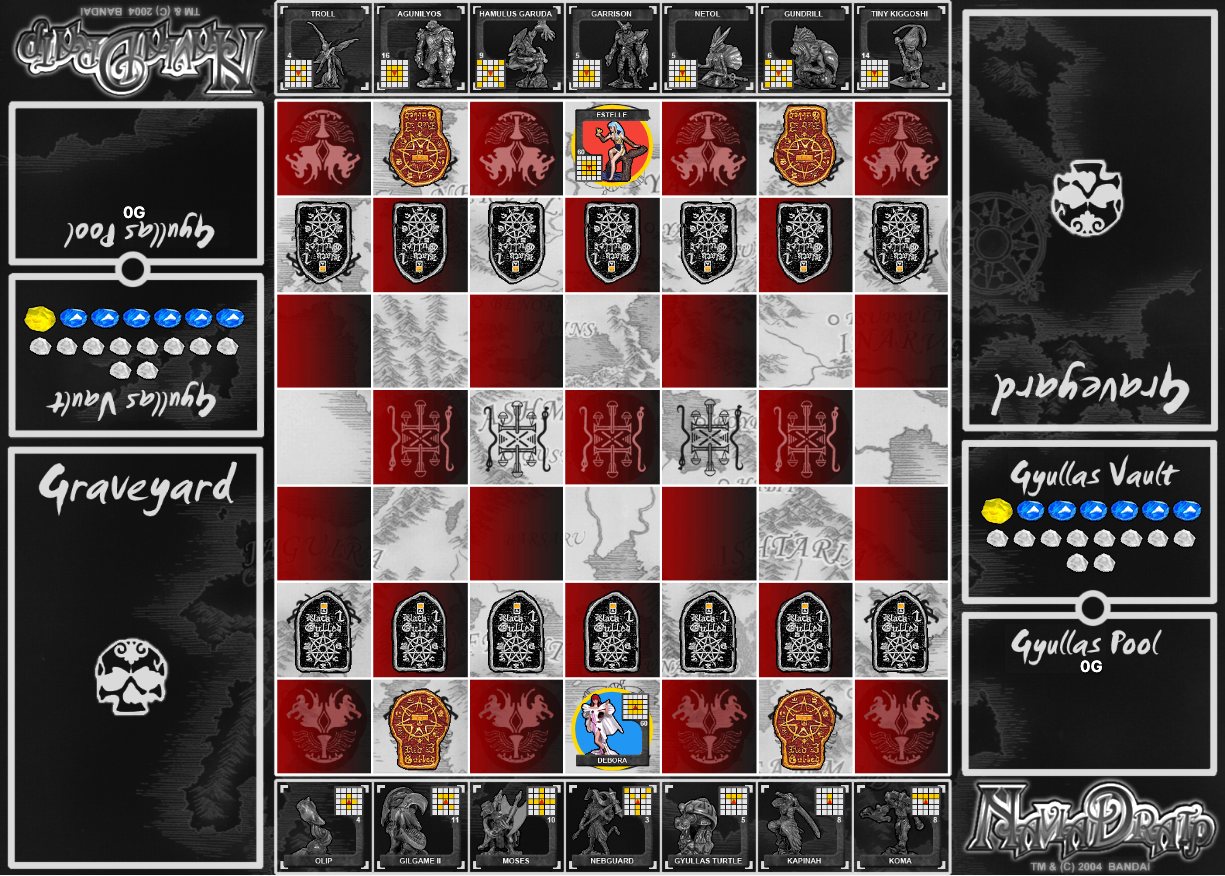
When a game is started, the board is set up automatically in the standard configuration:
- The Navia begins in the Navia Square in the middle of the last row
- 1 Black Gulled occupies each space of the row directly in front of the Navia
- 2 Red Gulled are placed in the same row as the Navia, one second from the right and the other second from the left
- All 7 Maseitai begin in the Maseitai Keep, ready to be summoned
Move
After determining who goes first, the first turn begins with Player 1 either moving a Gulled (remember that players earn Gyullas for Gulled movement) or summoning a Maseitai to one of their open Summon Squares (see Summon).
Play then continues, alternating between both players. On each turn, a player may either move one Gulled or Maseitai Battle Piece or summon a Maseitai. Players may also choose to Dratp during a turn (see Dratp). A player is allowed to move a Maseitai and then perform a Dratp with the same Maseitai. However, a move is not permitted AFTER a Dratp unless specifically noted.
Maseitai move according to the movement grid on their compass.
To move a piece, click it to select it, then click a valid destination square. You can also drag a piece directly to its destination. With the Auto End Turn toggle enabled, your turn ends automatically as soon as no further actions are possible — for example, after a summon, a Dratp, or moving a Gulled. With Auto End Turn off, you must click the End Turn button to pass play to your opponent.
Summon
A player is allowed to summon 1 Maseitai per turn. No Gyullas cost is paid to summon a Maseitai to the Battlefield. A player choosing to summon a Maseitai can do nothing else during the same turn.
In normal game conditions, a Maseitai can only be summoned to an unoccupied Summon Square on a player's own side of the Battlefield. To summon a Maseitai, click it in the Keep, then click an open Summon Square.
Dratp
Dratping is a totally unique feature of Navia Dratp, allowing players to alter the strategy of the game by expanding a Maseitai's movement or introducing a Dratp effect.
Remember, a Maseitai may move and then Dratp, but cannot Dratp and then move. In other words, a Dratp is the last action performed during a player's turn. In addition, a player cannot move a Gulled and then Dratp a Maseitai on the same turn.
To Dratp, select a Maseitai and click the Dratp button in the action panel. The Gyullas cost is deducted from your pool automatically. Some Dratp effects occur immediately, as stated in the Dratp effect text. Other Dratp effects, and increased movement granted by Dratping, take effect during that player's next turn.
Navia Dratp
Performing a Navia Dratp is one of the win conditions of the game, allowing a player to instantly claim victory. As with a regular Maseitai, a player's Navia can perform a Dratp simply by paying the Dratp cost. But note that the Navia's Dratp cost is 60 Gyullas, meaning a player must earn and carefully conserve all of their available Gyullas to make this action possible. Also remember that a Navia does not benefit from the Gyullas Reduction Zone: a Navia's Dratp cost is always 60 Gyullas.
IMPORTANT: A Navia CANNOT perform a Navia Dratp if it is in Check (see Check).
Taking Pieces
When one player's Maseitai or Gulled lands on a square occupied by an opponent's Maseitai or Gulled, the player who moved onto the square takes their opponents piece.
When a Gulled piece is taken, it is removed from the Battlefield and placed in its owner's Graveyard. The player who takes the piece earns 1 Gyullas for a Black Gulled and 3 Gyullas for a Red Gulled.
When a Maseitai piece is taken, it is removed from the Battlefield and placed in its owner's Graveyard.
The player who takes the piece earns Gyullas equal to the defeated Maseitai's Dratp cost. Remember that only Maseitai defeated in this way earn Gyullas: Maseitai removed from the Battlefield due to a Dratp Effect earn no Gyullas.
When a Navia piece is taken, the player who takes it wins the game!
Check
As in chess, "Check" signifies a situation in which one player can take another player's Navia on their next move. In this implementation, Check is detected and displayed automatically — your opponent is notified when their Navia is in Check.
A player who successfully takes their opponent's Navia wins the game.
A Navia that is in Check cannot perform a Navia Dratp.
Thousand War
– signifies a situation in which both players are "stuck" in a repetitive movement pattern. If three turns elapse for both players in which the same situation repeats without variation, and no Maseitai are summoned by either player,
"Thousand War" is declared and the game ends in a DRAW.
If Thousand War occurs in a Check situation, however, the player whose Navia was put in Check is declared the winner.
Line Over
A Line Over occurs when a player succeeds in moving one of their Gulled pieces the length of the Battlefield and over an opponent's End Line. When this occurs, the Gulled piece is automatically sent to the Graveyard. ONLY a Gulled Battle Piece (not a Maseitai) can perform a Line Over.
A player performing a Line Over can then choose one of two Line Over Bonuses using the buttons shown in the action panel:
1.) receive Gyullas equaling 10
OR
2.) move one of their Maseitai from their Graveyard to one of their open Summon Squares
Navia Goal
Navia Goal – Performing a Line Over with a Navia is known as a Navia Goal. A Navia Goal may only be performed by a player with no Maseitai remaining in
their own Maseitai Keep. A player who performs a Navia Goal instantly wins the game!
Navia Exceptions
In Navia Dratp, the Navia piece itself is a unique piece that is an exception to several rules that affect other Battle Pieces:
- Unless specifically mentioned in a Maseitai Dratp effect, the Navia is not affected
- The Navia piece does NOT receive the reduced Gyullas benefit from the Gyullas Reduction Zone that other Battle Pieces enjoy
Also remember that a Navia piece CANNOT DRATP if it is in Check.
Check List
Starter Set 1
N-001 Navia Estelle
M-001 Troll
M-002 Agunilyos
M-003 Hamulus Garuda
M-004 Garrison
M-005 Netol
M-006 Gundrill
M-007 Tiny Kiggoshi
Starter Set 2
N-002 Navia Debora
M-008 Olip
M-009 Gilgame II
M-010 Moses
M-011 Nebguard
M-012 Gyullas Turtle
M-013 Kapinah
M-014 Koma
Unleashed Darkness Booster Pack
N-003 Navia Io
N-004 Navia Krra
M-015 Schmidt
M-016 Matogayu
M-017 Midrah
M-018 Kanaba
M-019 Sungyullas
M-020 Tanhoizer
M-021 Kanimiso
M-022 Billpentod
M-023 Hansa
M-024 Kapinahs
M-025 Odd
M-026 Coydrocomp
M-027 Nemchant
M-028 Lord Kiggoshi
M-029 Chugyullas